
You should replace a fuse board when it has rewirable fuses, shows heat damage or cracks, trips for no clear reason, has no RCD protection or cannot take extra circuits. Watsons Electrical Hugglescote Ltd can inspect your existing fuse board and advise whether a modern consumer unit is the right next step for your home.
At a glance
- Key signs
- Rewirable fuses, cracks or scorch marks, frequent tripping, no RCD, no spare ways
- Typical time
- A few hours to a day for a standard home. Power is off during the work
- Building Regulations
- Replacing a consumer unit is notifiable under Part P in England
- Legal position
- No general requirement for homeowners. Landlords must test the installation every 5 years
- Next step
- Have an electrician inspect the board and the circuits
What are the signs that a fuse board needs replacing?
A fuse board is due for replacement if it shows any of these seven signs:
- It uses rewirable or cartridge fuses instead of circuit breakers
- It has a wooden or older plastic casing
- It shows scorch marks, heat damage, cracks or a burning smell
- Fuses blow or breakers trip often, with no clear cause
- It has no RCD protection
- It has no spare ways for new circuits, such as an oven, shower or EV charger
- An electrical condition report has recorded it as needing improvement
What is the difference between a fuse board and a consumer unit?
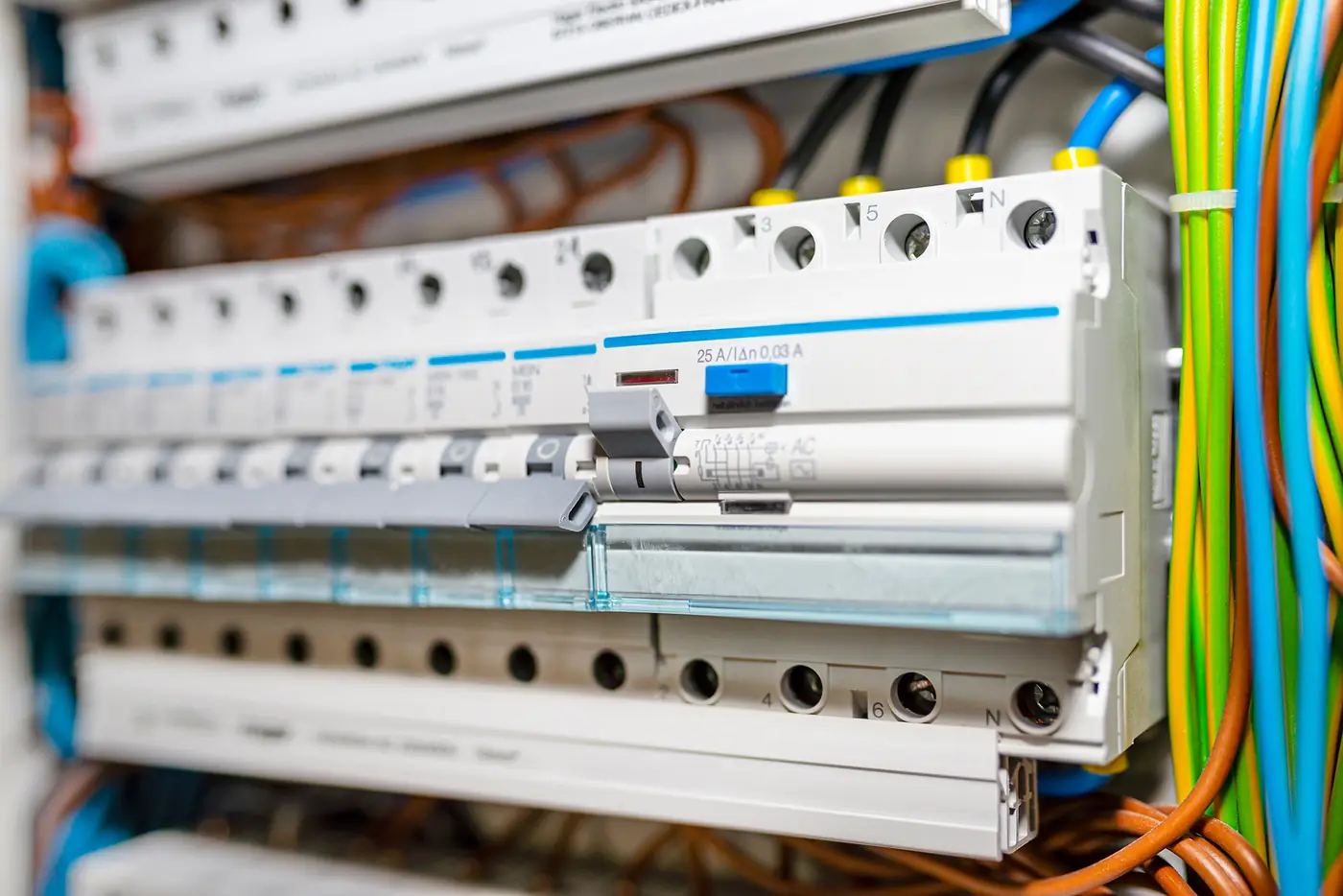
A fuse board is the older name for the distribution box in a home, and a consumer unit is the modern equivalent. Consumer units use circuit breakers and RCDs that switch off quickly on a fault, while older fuse boards rely on fuses that melt or have to be rewired.
What do MCBs, RCDs and RCBOs do?
These three devices protect a home in different ways:
| Device | What it does | Why it matters |
|---|---|---|
| MCB (miniature circuit breaker) | Switches a circuit off when it is overloaded or short-circuits | Stops cables overheating |
| RCD (residual current device) | Detects current leaking to earth and disconnects within a fraction of a second | Reduces the risk of a fatal electric shock |
| RCBO (residual current breaker with overcurrent protection) | Combines an MCB and an RCD for a single circuit | Only the faulty circuit trips, so the rest of the house stays on |
Is it a legal requirement to replace an old fuse board?
There is no general legal requirement for homeowners to replace a working fuse board. Private landlords in England, however, must have the electrical installation inspected and tested at least every five years, and an old fuse board can be recorded as needing improvement. Replacing a consumer unit is notifiable work under Part P, which our Part P guide explains.
What happens when a fuse board is replaced?
A replacement follows these steps:
- Inspect. The electrician checks the existing board and the circuits it serves.
- Isolate. The power is switched off for the duration of the work.
- Replace. The old board is removed and the new consumer unit is fitted and connected.
- Label. Every circuit is labelled so you know what each breaker controls.
- Test and certify. Each circuit is tested, and you should receive an Electrical Installation Certificate.
Frequently asked questions
How much does it cost to replace a fuse board?
The cost depends on the number of circuits, the type of consumer unit, how easy the old board is to reach and any extra work found during testing. Call 07359 854049 to arrange a quotation.
How long does it take to replace a fuse board?
A standard replacement in a home typically takes a few hours to a day, and the power is off while the work is carried out.
Do I need a new fuse board if my RCD keeps tripping?
Not necessarily. A tripping RCD usually points to a fault on a circuit or an appliance, which should be investigated before anything is replaced.
Can a fuse board be replaced without rewiring the house?
Yes. A fuse board upgrade is separate from a rewire. The electrician tests the existing circuits first and may find faults that need fixing.
Does a new consumer unit have to be metal?
Current wiring regulations call for consumer units in homes to have a non-combustible enclosure, which in practice usually means metal.
Sources and further reading
Last reviewed: by Watsons Electrical Hugglescote Ltd. Questions about your own property? Call 07359 854049.